Ambala, Haryana, India

call images

Call us

08045479243

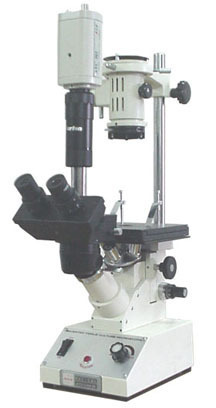
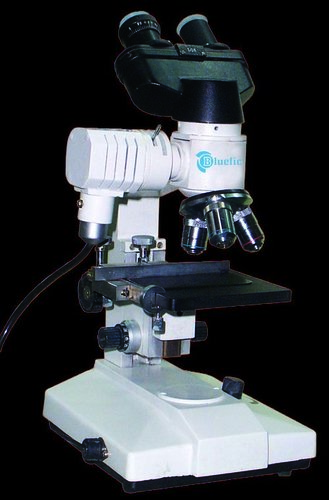
Trinocular Inverted Microscope

Trinocular Inverted Microscope

Trinocular Inverted Microscope Specification

  • Focus System
  • Coaxial coarse and fine focusing system.
  • Spare Parts
  • Supplied with dust cover, power cord, user manual. Additional eyepieces, objectives, and bulbs available.
  • View Head
  • Trinocular head, 360 rotatable.
  • Features
  • Ideal for cell culture observation, easy camera mounting, anti-fungus optics, ergonomic design.
  • Theory
  • Drawtube
  • Trinocular, with phototube for camera attachment.
  • Sensor
  • Supports digital or CCD camera integration (camera optional).
  • Resolution
  • Up to 2048 x 1536 pixels (with compatible camera attachment).
  • Interface
  • C-mount adapter for camera connection.
  • Frame Rate
  • Up to 30 fps (with compatible camera).
  • Focal Distance
  • 160 mm (objective optical length).
  • Magnification
  • Total magnification 40X to 400X (objectives 4X, 10X, 20X, 40X LWD plus 10X wide field eyepiece).
  • Dimensions
  • Approx. 570 mm x 400 mm x 290 mm.
  • Focus Range
  • Coarse and fine coaxial focusing, range up to 10 mm.
  • Eyepieces
  • Wide field 10X/18mm, eyeguard included.
  • Eyepiece Tube
  • Inclined at 45, ambidextrous viewing.
  • Illumination
  • LED (6V/20W halogen or LED with adjustable brightness).
  • Coarse Adjustment Range
  • 10 mm coaxial drive.
  • Fine Adjustment Range
  • 0.002 mm/grad (minimum graduation).
  • Working Stage
  • Mechanical stage with X-Y movement, size 230 x 150 mm.
  • Still Image Capture Resolution
  • Up to 3MP (via digital camera attachment).
  • Video Capture Resolution
  • Up to 1080p (via digital camera attachment).
  • Image Format
  • JPEG, BMP, TIFF (via camera integration).
  • Interpupillary Distance
  • 48 75 mm adjustable.
  • Objective Achromatic
  • 4X, 10X, 20X, 40X (Long Working Distance, Achromatic, anti-fungus treated).
  • Condenser
  • Long working distance condenser NA 0.30, focusable and removable.
  • Light Source
  • LED or Halogen 6V/20W, with intensity control.


About Trinocular Inverted Microscope

This Latest model has been designed to examine and sturdy tissue cultures, bacteria plankton, Protozoan and similar Micro-organisms in media. Sturdy base with built in 6V-30W continuously variable light intensity control. Stage size180x150mm with extension plates for large bottles & micro filter work with detachable or co-axial mechanical graduated stage. Illumination Koehler system provided by 6V-20W. Binocular Observation head has been provided with coated prismatic system. Latest co-axial coarse & fine focusing system based on a4- gear reduction system traveling on ball bearing guides with highly sensitivity fine motion with a graduation reading to 0.002mm.

Quadruplenose piece revolving turret to carry objectives:

Objectives   : 5x, 10x, 20x & 40x

Eyepieces    : WF 10x (Pair) with eye guards.

Filters          : Blue & White.  

Specification as model BTM 417 but provided witha Trinocular head with binocular observation and straight tube forPhotomicrography


Sturdy Design for Reliable Performance

The microscope rests on a robust anti-vibration cast metal base, ensuring stability during detailed sample observation. Its mechanical stage offers X-Y movement with fine adjustments, while the ergonomic inclined eyepiece tube provides comfortable, ambidextrous viewing for prolonged usage.


Advanced Imaging and Camera Compatibility

Designed to integrate seamlessly with most C-mount digital and CCD cameras, this microscope enables high-resolution imaging and video capture. Users can connect cameras easily via the phototube, capturing images in JPEG, BMP, or TIFF formats and recording videos up to 1080p.


Precise Optics for Cell Culture Studies

With long working distance objectives and anti-fungus treated achromatic lenses, the microscope delivers sharp images ideal for observing living cells and tissues. Fine and coarse coaxial focusing systems allow accurate adjustments, making it perfect for research, academic, and clinical applications.

FAQ's of Trinocular Inverted Microscope:


Q: How does the trinocular design benefit laboratory applications?

A: The trinocular head allows simultaneous viewing through both eyepieces and the phototube, enabling direct attachment of a camera for capturing images or live video during demonstrations or analyses, which is highly beneficial for documentation and sharing results in research environments.

Q: What is the process for attaching a digital camera to the microscope?

A: To attach a digital or CCD camera, simply use the C-mount adapter on the phototube of the trinocular head. Ensure the camera is compatible for integration, and follow the manufacturer's guidelines for secure connection and optimal imaging performance.

Q: Where is this microscope typically used, and for what research purposes?

A: This inverted microscope is commonly utilized in laboratories, hospitals, and research facilities for observing living cells, tissues, and samples in culture media. It is widely employed in cell biology, microbiology, and tissue engineering studies.

Q: What are the benefits of the anti-fungus treated objectives?

A: Anti-fungus treated achromatic objectives keep optical performance high and prevent damage from humidity, ensuring clear, reliable images and extending the lifespan of the microscope, especially in environments prone to fungal growth.

Q: How can the stage movement range improve the usage experience?

A: The mechanical stage offers an X-Y movement range of 75 mm x 50 mm, along with a vernier scale for precise sample positioning. This facilitates accurate observation of specific areas within samples, enhancing efficiency during cell culture studies.

Q: When should the illumination source be switched between LED or halogen?

A: Switch between LED and halogen illumination depending on sample thickness and desired image clarity. LEDs offer adjustable brightness and longer life, while halogen bulbs provide intense, warmer light ideal for brightfield applications or thicker specimens.

Q: What advantages does the fine focus division of 0.002 mm provide?

A: The ultra-precise fine focus division allows detailed focusing adjustments, enabling users to resolve minute cellular structures and optimize imaging quality, which is crucial for tasks requiring high accuracy, such as cell culture analysis and microstructure examination.

Tell us about your requirement
product

Price:

Quantity
Select Unit

  • 50
  • 100
  • 200
  • 250
  • 500
  • 1000+
Additional detail
Mobile number

Email

More Products in Laboratory Microscope Category

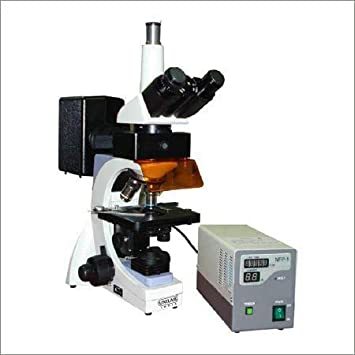
Metallurgical Trinocular Microscope

Metallurgical Trinocular Microscope

Condenser : No condenser (for reflected light, adaptable for simple transmitted observation)

Working Stage : Rectangular mechanical stage 185x140mm, movement 75x50mm

Magnification : 50x to 1200x (combined with optional eyepieces and objectives)

Dimensions : Approx. 400mm x 300mm x 500mm (L x W x H)

Resolution : Up to 1200x depending on eyepieceobjective combination and camera

Light Source : Halogen lamp (6V 20W), LED variant optional

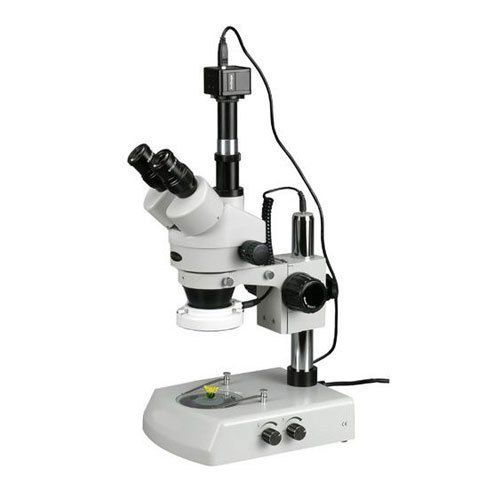
Binocular Zoom Stereoscopic Microscope

Binocular Zoom Stereoscopic Microscope

Condenser : Not applicable for stereo microscope

Working Stage : Large flat black/white stage plate; diameter approx. 95100 mm, with slide clips

Magnification : Zoom range from 7x to 45x (with standard 10x eyepieces; higher magnification possible with auxiliary lenses)

Dimensions : Approx. 320 mm (H) x 250 mm (Base diameter)

Resolution : Dependent on optical system & eyepiece/objective combination

Light Source : Top and bottom variable LED lights, 220V/110V adaptable

Advance Research Binocular Microscope

Advance Research Binocular Microscope

Condenser : Abbe condenser N.A. 1.25 with iris diaphragm and filter holder

Working Stage : Mechanical stage with XY movement and coaxial controls

Magnification : 40x to 1500x (using standard objectives and eyepieces)

Dimensions : Approx. 380 mm (H) x 230 mm (W) x 180 mm (D)

Resolution : High optical resolution, dependent on objective used

Light Source : Halogen 6V/20W with variable intensity control

Metallurgical Binocular Microscope

Metallurgical Binocular Microscope

Condenser : Abbe condenser NA 1.25

Working Stage : Mechanical stage with XY adjustment 140 x 135 mm

Magnification : 40x 1000x

Dimensions : 200 x 180 x 370 mm

Resolution : 1920 x 1080

Light Source : Halogen or LED


Back to top