About Vernier And Traveling Microscope
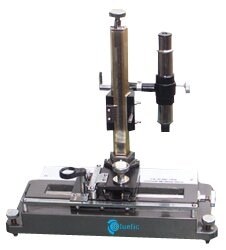
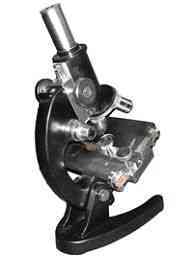
BTM401Vernier Microscope: (Traveling Microscope) with 18 cms. and 15cms. Stainless steel scales. Vernier reading to 0.01 mm, provided with achromatic objective and 10x Ramsden eye piece with fine cross line hair. Complete in nicely polished case.
Robust Construction for Long-lasting AccuracyThe microscope features a heavy cast iron base with non-slip rubber feet to minimize vibrations and ensure measurement stability. All critical fittings are made from brass and stainless steel, which resist corrosion and provide long-term durability, even in busy laboratory environments. Knurled adjustment knobs ensure smooth, precise control without slipping during operation.
Precision Measurements Made SimpleWith its fine vernier scale, ground metal tubes, and achromatic optics, the instrument measures small distances as accurately as 0.01 mm. The metric stage scale and micrometer head facilitate reliable positioning along X and Y directions. This makes the device perfect for detailed calibration tasks, educational demonstrations, and precision engineering measurements.
Safe and Versatile for Educational UseNo electrical components are present, making the microscope safe for various educational settings. The device operates in ambient laboratory conditions (10C 40C), relying on natural or external illumination. Its mechanical design encourages hands-on learning and manual skill development, while spares and accessories ensure continued usability.
FAQs of Vernier And Traveling Microscope:
Q: How is the Vernier and Traveling Microscope operated?
A: The microscope is fully manual, with mechanical knobs for both coarse and fine adjustments. Measurements are directly read through the optical eyepiece and vernier scale, making data collection straightforward and requiring no electronic interface.
Q: What are the main benefits of using this microscope?
A: It offers highly accurate measurement of small distancesdown to 0.01 mmthanks to its robust design, precision machined components, and optical magnification. Its stable base and anti-vibration features maximize accuracy, supporting reliable results in research and education.
Q: Where is this microscope typically used?
A: It is commonly employed in schools, colleges, and research laboratories. Its application spans calibration, scientific measurement of minute objects, and precision engineering work that requires meticulous attention to detail.
Q: What process does it use to achieve precise measurement?
A: The device combines the principles of the vernier scale and micrometer accuracy. The carriage moves smoothly along precision-ground tracks, and the user visually observes the measurement through the microscopes monocular lens, adjusting fine and coarse controls as needed.
Q: How is safety ensured during operation?
A: With no electrical or electronic components, the microscope is inherently safe. Its sturdy cast iron base with rubber feet discourages slippage and vibration, while mechanical construction avoids common electrical hazards in lab environments.
Q: What are the usage conditions for optimal performance?
A: For best results, operate the microscope in laboratory environments with ambient temperatures between 10C and 40C. Use natural or external sources of illumination, and ensure the specimen is securely clamped on the working stage for stable measurement.





 English
 Spanish
 French
 German
 Italian
 Chinese (Simplified)
 Japanese
 Korean
 Arabic
 Portuguese
 Send Inquiry
 Get Latest Price

