About Rotary VDRL Shaker
Rotary Shaker
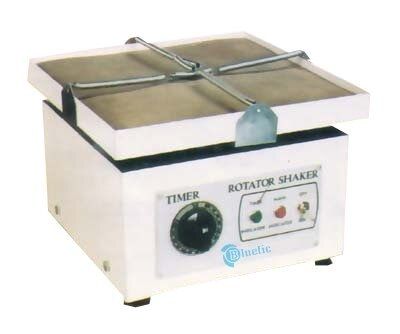
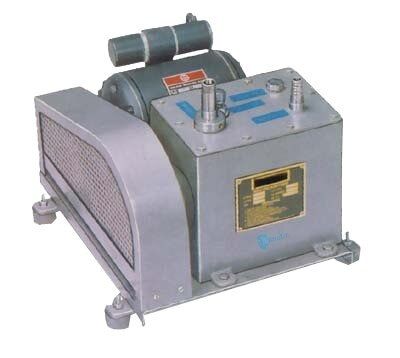
Suitable for VDRL and others agglutination tests, blood grouping tests and for mixing of solutions in small flasks, beaker or bottles. Body made out of thick mild steel finished in stoving enamel/powder coated paint. Heavy duty motors of suitable capacities are provided for long duration operations. Fixed speed and variable speed models are offered. Platform is provided with rubber discs or stainless steel clamps to hold flasks. To work on 220V AC 50 Hz single phase. The choices available are:
Homogenizing vessel 25ml
Homogenizing vessel 50ml
Homogenizing vessel 100ml
Robust and Reliable ConstructionEngineered with a powder-coated mild steel body and a stainless steel platform, this shaker ensures longevity and resistivity to corrosion. The non-slip rubber disc platform keeps slides securely in place during operation, making it optimal for frequent use in clinical laboratories.
Precise Mixing for Serological TestsWith an adjustable speed range from 50 to 220 RPM and accurate control ( 2 RPM), users can select the ideal mixing conditions required for a variety of serological and VDRL slide tests. Continuous or timed operation provides flexibility for different testing protocols.
User-Friendly Operation and SafetyThe manual speed regulator and analog RPM scale make it easy for technicians to set and monitor the mixing speed. Operating at noise levels below 60 dB, the shaker is comfortable to use in busy laboratory environments without causing distraction or disturbance.
FAQs of Rotary VDRL Shaker:
Q: How is the Rotary VDRL Shaker operated in clinical laboratories?
A: The Rotary VDRL Shaker operates by manually adjusting the speed regulator to the desired RPM, allowing users to mix slides either continuously or within a preset time interval. Its analog RPM scale offers easy monitoring during serological and VDRL tests.
Q: What types of tests can this shaker be used for?
A: This shaker is primarily used for VDRL slide tests and other serological procedures in clinical laboratories that require gentle, uniform mixing of samples for accurate diagnostic results.
Q: When is it appropriate to use the continuous operation mode?
A: Continuous operation mode is suitable for tests that require uninterrupted mixing over extended periods, such as prolonged serological assays or batch processing of multiple slides.
Q: Where can this rotary shaker be installed in a laboratory setting?
A: The shakers compact dimensions (375 x 375 x 150 mm) and low operational noise make it ideal for installation on standard laboratory benches or workstations in clinical diagnostic labs and research facilities.
Q: What is the process for setting up the shaker for a slide test?
A: To set up, place the slides on the non-slip rubber platform, set the desired RPM with the speed regulator, choose continuous or timed operation, and monitor the speed using the analog RPM display. Ensure the shaker is connected to a 220-240 V AC power source.
Q: How does the non-slippery platform benefit laboratory use?
A: The rubber disc platform securely holds slides in place during mixing, minimizing the risk of sample spillage or slide movement, thereby enhancing lab safety and ensuring accurate test results.
Q: What is the main usage benefit of variable speed control?
A: Variable speed control allows users to tailor the mixing speed to the specific requirements of each test, accommodating various sample types and ensuring the precision necessary for reliable diagnostic procedures.





 English
 Spanish
 French
 German
 Italian
 Chinese (Simplified)
 Japanese
 Korean
 Arabic
 Portuguese
 Send Inquiry
 Get Latest Price

