About Antibiotic Zone Reader
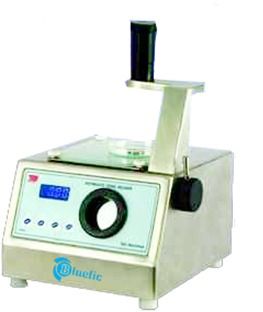
BTP243 ANTIBIOTIC ZONE READER:- An ideal device for determination the strength of antibiotic activity, by measuring the diameter of inhibition zone in a Petri dish. It measures the diameter of inhibition zone to 0.1mm within the range of 0-35mm. Light from source in the base, passes through the transparent and semi transparent of agar, then to refluxed mirror supported an arm above the unit. The mirror reflects the light to the glass prism mounted at the front of unit and magnified image of the zone clearly visible on the prism.
Clear and Precise Zone MeasurementEquipped with a 3X magnifying lens and built-in illumination, the Antibiotic Zone Reader enables users to observe and measure inhibition zones in petri dishes with exceptional clarity. The acrylic scale, marked in 0.1 mm increments, and analog dial gauge facilitate precise readings essential for scientific analysis.
Durable, User-Friendly ConstructionManufactured with an epoxy powder coated steel body, this instrument is engineered for durability within busy laboratory settings. The stable base and integral petri dish holder ensure secure placement during measurements, reducing errors and increasing repeatability.
Versatile Application Across LaboratoriesWidely utilized in microbiology, pharmaceutical, and clinical laboratories, the Antibiotic Zone Reader is essential for tasks involving antibiotic susceptibility testing. Its manual operation and ambient temperature range make it a versatile addition to quality control and research setups globally.
FAQs of Antibiotic Zone Reader:
Q: How do I use the Antibiotic Zone Reader to measure inhibition zones?
A: Start by placing your petri dish in the integral holder. Power on the built-in light source to illuminate the dish. Look through the 3X magnifying lens to focus on the inhibition zone and use the analog dial gauge with the graduated scale to measure the diameter to an accuracy of 0.2 mm.
Q: What types of laboratories benefit most from using this Antibiotic Zone Reader?
A: This zone reader is ideal for microbiology, pharmaceutical, and clinical labs where antibiotic susceptibility testing and precise measurement of inhibition zones are required. Both research institutions and quality control departments find this equipment invaluable.
Q: When should I calibrate or check the accuracy of the device?
A: For optimal measurement reliability, calibrate the device or verify its accuracy regularly, such as before each series of tests or after any incident that could impact precision, in accordance with your labs standard protocols.
Q: Where can the Antibiotic Zone Reader be efficiently installed?
A: Install the reader on a stable laboratory bench in areas requiring zone measurements. Its compact dimensions (245 x 345 x 175 mm) make it suitable for most standard lab spaces, provided access to a 230 V AC power source.
Q: What is the process for cleaning and maintaining the equipment?
A: To maintain optimal performance, clean the steel housing and acrylic scale with a soft, damp cloth and mild detergent. Always switch off the device and disconnect it from the power source before cleaning. Regularly inspect the lens and illumination system for obstructions or residue.
Q: Which features contribute to the precision and usability of the zone reader?
A: Features such as the 3X magnifying lens, illuminated background, analog dial gauge, and graduated scale (0.1 mm increments) ensure precise, easy observation and measurement, while the sturdy steel build and stable holder provide consistent performance.
Q: What are the primary benefits of using this manual antibiotic zone reader over other methods?
A: Manual operation allows direct control and visibility during measurements. The magnifying and illuminated features enhance accuracy, and the durable construction ensures long-term reliability, making it especially suitable for demanding laboratory environments.





 English
 Spanish
 French
 German
 Italian
 Chinese (Simplified)
 Japanese
 Korean
 Arabic
 Portuguese
 Send Inquiry
 Get Latest Price

